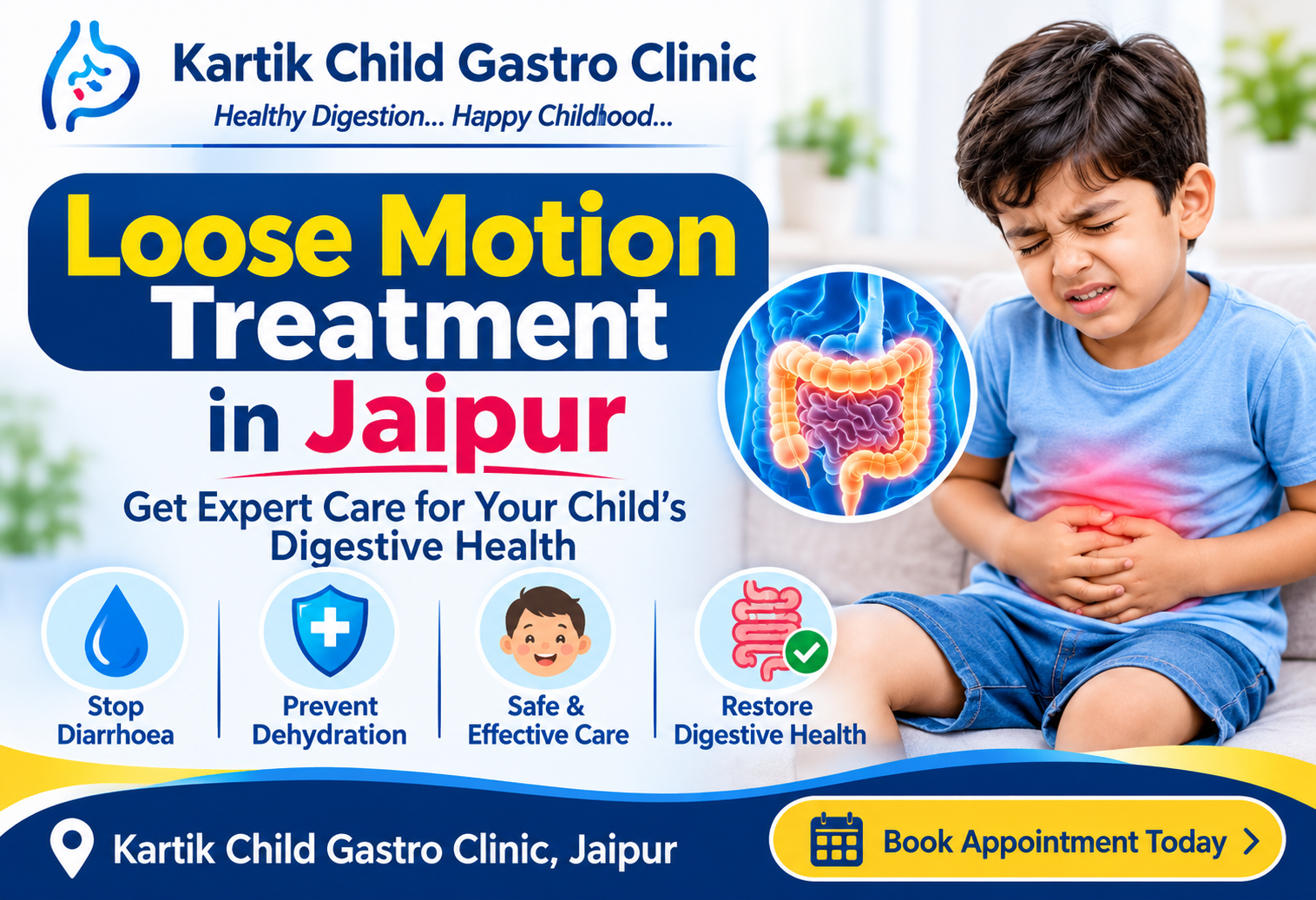
Loose motion (diarrhea) is a common digestive problem in children. It occurs when a child passes loose, watery stools more frequently than usual. It may be caused by viral or bacterial infections, food contamination, food intolerance or other digestive conditions.
Loose motion can lead to dehydration, weakness, loss of appetite and nutritional problems, especially in infants and young children. Proper evaluation and timely treatment are important to protect a child’s health.
At Kartik Child Gastro Clinic, we provide specialized pediatric gastroenterology consultation for children experiencing diarrhea and other digestive problems. Dr. Natwar Parwal focuses on identifying the possible causes of loose motion and recommending appropriate treatment according to the child’s age, symptoms and medical condition.
Parents looking for Loose Motion Treatment in Jaipur can consult Dr. Natwar Parwal for specialized guidance regarding children’s digestive health.
About Dr. Natwar Parwal – Pediatric Gastroenterologist
Dr. Natwar Parwal is associated with Kartik Child Gastro Clinic and specializes in pediatric gastroenterology and hepatology.
Educational Qualifications:
- MBBS
- DCH (Diploma in Child Health)
- Fellowship in Pediatric Gastroenterology & Hepatology (ISPGHAN), Medanta – The Medicity, Gurgaon.
With specialized fellowship training in children’s digestive and liver disorders, Dr. Natwar Parwal focuses on evaluating gastrointestinal problems in infants, children and adolescents.
His approach emphasizes understanding symptoms, identifying possible causes and recommending suitable medical care for children’s digestive health concerns.
What Is Loose Motion in Children?
Loose motion, medically known as diarrhea, refers to passing loose or watery stools more frequently than normal.
It can develop suddenly and last for a few days, or continue for a longer period depending on the underlying cause.
Children with diarrhea may also experience stomach cramps, vomiting, fever, weakness and reduced appetite.
Frequent watery stools can cause the body to lose water and essential salts, increasing the risk of dehydration. Infants and younger children are particularly vulnerable.
Common Causes of Loose Motion in Children
Several factors can cause diarrhea in children.
1. Viral Infections
Viruses such as rotavirus and norovirus can cause intestinal infections, resulting in watery stools, vomiting, fever and stomach discomfort.
2. Bacterial Infections
Contaminated food or water may expose children to harmful bacteria that cause diarrhea, abdominal pain and sometimes fever.
3. Food Intolerance
Some children experience loose stools after consuming certain foods due to lactose intolerance or other food-related sensitivities.
4. Poor Food Hygiene
Eating contaminated food or drinking unsafe water can increase the risk of digestive infections.
5. Antibiotic-Associated Diarrhea
Certain antibiotics can disturb the normal balance of intestinal bacteria and cause loose stools.
6. Celiac Disease
Celiac disease is an immune-mediated condition triggered by gluten. It may cause chronic diarrhea, bloating, abdominal pain and poor growth.
7. Other Digestive Disorders
Persistent diarrhea may sometimes be associated with inflammatory bowel disease, malabsorption or other gastrointestinal conditions.
Symptoms Associated with Loose Motion
Parents should watch for the following symptoms:
- Frequent loose or watery stools.
- Abdominal pain and cramps.
- Vomiting or nausea.
- Fever.
- Loss of appetite.
- Weakness and tiredness.
- Increased thirst.
- Reduced urination.
- Dry mouth and tongue.
- Poor weight gain in children with prolonged symptoms.
Signs such as very little urine, unusual sleepiness, sunken eyes, inability to drink or persistent vomiting may indicate dehydration and require urgent medical attention.
When Should You Consult a Pediatric Gastroenterologist?
Occasional loose stools may improve within a short period, but persistent or severe diarrhea requires medical evaluation.
Consult a specialist if your child experiences:
- Frequent watery stools.
- Loose motion lasting several days.
- Repeated diarrhea episodes.
- Blood or mucus in stools.
- Diarrhea associated with abdominal pain.
- Poor appetite and weight loss.
- Recurrent vomiting.
- Poor growth or nutritional concerns.
Seek urgent medical attention if your child shows signs of dehydration, blood in stools, severe abdominal pain, high fever, unusual drowsiness or an inability to drink fluids.
Diagnosis of Loose Motion in Children
Finding the underlying cause of diarrhea is important for providing suitable treatment.
At Kartik Child Gastro Clinic, the doctor may evaluate:
1. Medical History
The doctor reviews the duration, frequency and severity of loose stools.
2. Dietary History
Food habits, water intake and possible food-related triggers are assessed.
3. Hydration Assessment
The doctor checks for signs of dehydration, including dry mouth, reduced urination and changes in activity.
4. Growth and Nutrition Assessment
The child’s weight, growth pattern and nutritional condition may be reviewed.
5. Diagnostic Investigations
Depending on the symptoms, investigations may include stool tests, blood tests or other examinations to identify infections and digestive conditions.
Not every child requires laboratory testing. Investigations are recommended according to the child’s medical condition.
Loose Motion Treatment for Children
Treatment depends on the cause, duration and severity of diarrhea. The main priority is preventing dehydration and maintaining adequate nutrition.
1. Oral Rehydration Solution (ORS)
ORS helps replace water and essential salts lost through frequent loose stools. Parents should offer correctly prepared ORS in small, frequent amounts, following medical guidance.
2. Continue Breastfeeding
Breastfeeding should continue during diarrhea. It provides important fluids and nutrition for infants.
3. Maintain Proper Nutrition
Age-appropriate feeding should generally continue. Easily tolerated foods and regular meals can help maintain nutritional intake.
4. Zinc Supplementation
Zinc supplementation may be recommended for children with acute diarrhea according to age and medical guidelines. The doctor will advise the appropriate dose and duration.
5. Treatment of Infection
If a specific bacterial or parasitic infection is identified, the doctor may recommend appropriate medication. Antibiotics are not required for every case of diarrhea.
6. Management of Underlying Digestive Conditions
Children with recurring or prolonged diarrhea may require evaluation for conditions such as celiac disease, food intolerance or inflammatory bowel disease.
7. Follow-Up Consultation
Children with persistent symptoms may need follow-up assessments to monitor hydration, nutritional status, weight and recovery.
Parents should avoid giving anti-diarrheal medicines or antibiotics without medical advice.
How to Prevent Loose Motion in Children?
Simple hygiene and food safety practices can help reduce the risk of digestive infections.
- Encourage children to wash their hands before eating.
- Provide clean and safe drinking water.
- Wash fruits and vegetables properly.
- Serve freshly prepared and properly cooked food.
- Avoid unhygienic street food.
- Maintain proper kitchen hygiene.
- Follow recommended childhood vaccination schedules, including rotavirus vaccination.
- Maintain good personal hygiene.
These habits can help protect children from several common causes of diarrhea.
Why Choose Kartik Child Gastro Clinic?
Kartik Child Gastro Clinic focuses on specialized digestive and liver health consultation for children.
Reasons to consult our clinic include:
- Consultation with Dr. Natwar Parwal.
- Fellowship training in Pediatric Gastroenterology & Hepatology.
- Evaluation of acute and recurring diarrhea.
- Assessment of intestinal and digestive disorders.
- Guidance regarding dehydration and nutritional concerns.
- Evaluation of suspected food intolerance and celiac disease.
- Individualized medical recommendations.
- Parent-focused guidance and follow-up care.
Our goal is to help parents understand their child’s digestive health problems and receive appropriate specialist consultation.
Book an Appointment for Loose Motion Treatment
Frequent loose motion can affect a child’s hydration, appetite, nutrition and overall health. Timely medical evaluation helps identify the possible cause and guide appropriate treatment.
At Kartik Child Gastro Clinic, Dr. Natwar Parwal provides specialized consultation for children experiencing diarrhea, stomach pain, vomiting and other digestive problems.
Consult Dr. Natwar Parwal
MBBS, DCH, Fellowship Pediatric Gastroenterology & Hepatology (ISPGHAN), Medanta The Medicity, Gurgaon.
Contact Kartik Child Gastro Clinic to schedule an appointment for your child.
Frequently Asked Questions (FAQs)
1. What causes loose motion in children?
Common causes include viral infections, bacterial infections, contaminated food or water, food intolerance and certain digestive conditions.
2. How can I stop loose motion in my child?
The main priority is preventing dehydration. Give correctly prepared ORS in small, frequent amounts, continue breastfeeding and age-appropriate feeding, and consult a doctor if symptoms persist or worsen.
3. Is ORS helpful for children with diarrhea?
Yes. ORS helps replace fluids and essential salts lost through watery stools. It is an important part of managing diarrhea and preventing dehydration.
4. When should I take my child to a doctor for loose motion?
Consult a doctor if diarrhea is frequent, persistent, associated with fever, vomiting or abdominal pain, or if your child has poor appetite. Signs of dehydration require urgent medical attention.
5. Can teething cause loose motion in babies?
Teething itself is not considered a direct cause of diarrhea. Loose stools should be evaluated for other possible causes, particularly if they are frequent or watery.
6. What foods should I give my child during loose motion?
Continue breastfeeding and age-appropriate regular feeding. Offer foods the child can tolerate and maintain adequate fluid intake. Avoid unnecessary dietary restrictions.
7. Can loose motion cause dehydration in children?
Yes. Frequent watery stools can cause significant fluid and electrolyte loss. Warning signs include reduced urination, dry mouth, sunken eyes, excessive thirst and unusual sleepiness.
8. When is diarrhea considered chronic in children?
Diarrhea lasting 14 days or longer is generally considered persistent diarrhea. It requires medical evaluation to identify the underlying cause.
9. Can celiac disease cause repeated loose motion?
Yes. Celiac disease can cause chronic diarrhea, abdominal discomfort, bloating and poor growth. Appropriate blood tests and, when indicated, intestinal biopsy may help establish the diagnosis.
10. Which doctor should I consult for recurring loose motion in children?
A pediatric gastroenterologist can evaluate recurring diarrhea and related digestive problems. Dr. Natwar Parwal at Kartik Child Gastro Clinic provides specialized consultation for children’s digestive health concerns.