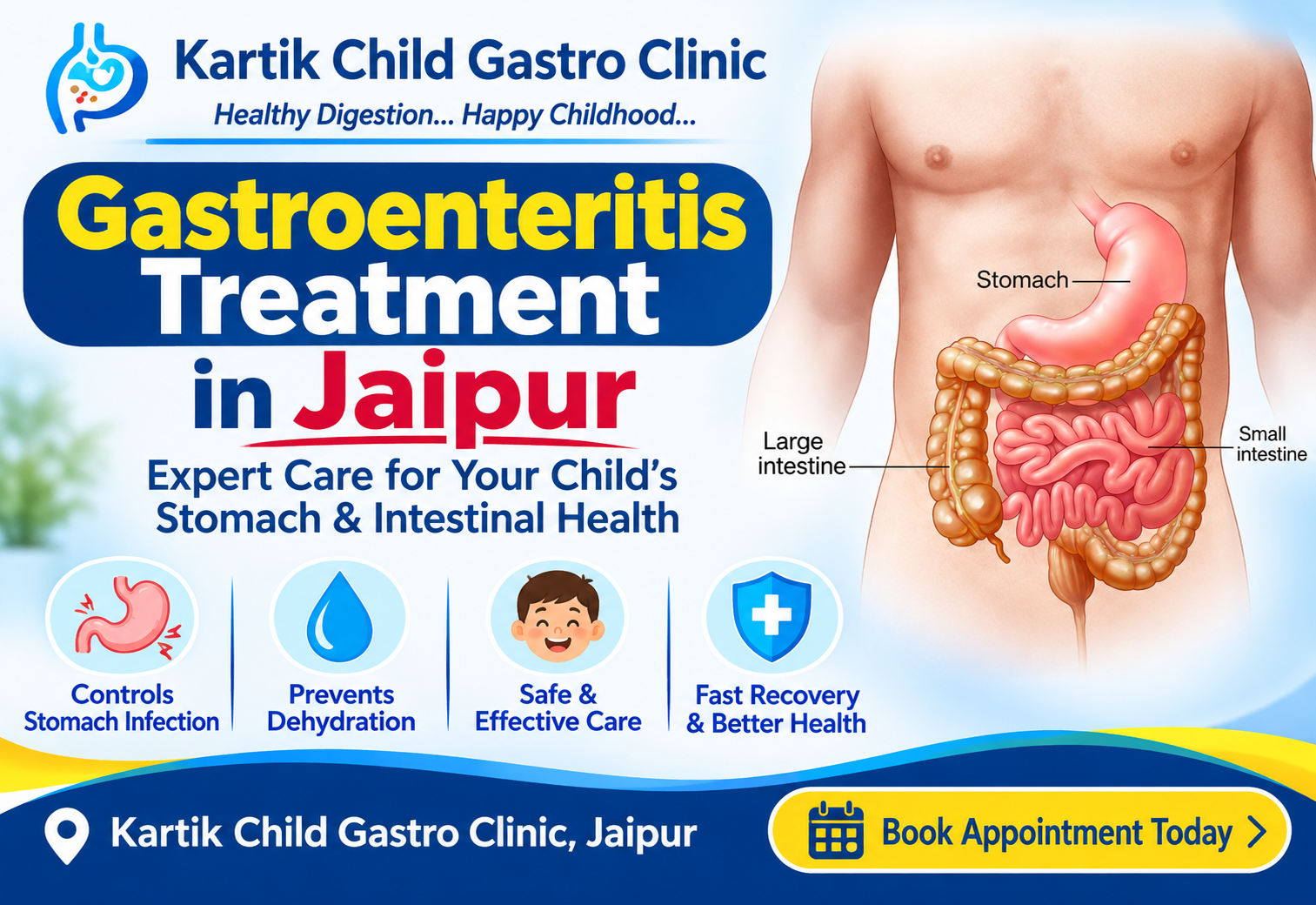
Gastroenteritis is a common digestive condition in children that causes inflammation of the stomach and intestines. It can lead to diarrhea, vomiting, stomach pain, fever and loss of appetite. Viral infections are a common cause, although bacteria, parasites and contaminated food or water can also contribute to the condition.
Gastroenteritis can cause significant fluid and electrolyte loss, especially in infants and young children. Early medical evaluation and proper hydration are important to prevent dehydration and support recovery.
At Kartik Child Gastro Clinic, we provide specialized pediatric gastroenterology consultation for children experiencing gastroenteritis and other digestive problems. Dr. Natwar Parwal focuses on identifying the possible causes of gastrointestinal symptoms and recommending appropriate treatment according to each child’s medical condition.
Parents looking for gastroenteritis care in Jaipur can consult Dr. Natwar Parwal for specialized children’s digestive health guidance.
About Dr. Natwar Parwal – Pediatric Gastroenterologist
Dr. Natwar Parwal is associated with Kartik Child Gastro Clinic and specializes in pediatric gastroenterology and hepatology.
Educational Qualifications:
- MBBS
- DCH (Diploma in Child Health)
- Fellowship in Pediatric Gastroenterology & Hepatology (ISPGHAN), Medanta – The Medicity, Gurgaon.
With specialized fellowship training in children’s digestive and liver disorders, Dr. Natwar Parwal focuses on evaluating gastrointestinal problems in infants, children and adolescents.
His approach emphasizes understanding symptoms, identifying possible causes and recommending suitable medical care for children’s digestive health concerns.
What Is Gastroenteritis in Children?
Gastroenteritis is inflammation of the stomach and intestines, commonly caused by infections. It is sometimes called stomach flu, although it is different from influenza.
The condition affects the digestive system and may cause frequent loose stools, vomiting, abdominal cramps and fever.
Symptoms may develop suddenly and can last for several days, depending on the underlying infection and the child’s health.
Young children are more vulnerable to dehydration because they can lose fluids quickly through repeated vomiting and diarrhea.
Common Causes of Gastroenteritis in Children
Several infections and environmental factors can cause gastroenteritis.
1. Viral Infections
Viruses are among the most common causes of gastroenteritis in children.
Common viruses include:
- Rotavirus
- Norovirus
- Adenovirus
- Astrovirus
These infections can cause watery diarrhea, vomiting, fever and stomach discomfort.
2. Bacterial Infections
Bacterial infections may develop after consuming contaminated food or water.
Some bacteria associated with gastroenteritis include:
- Salmonella
- Shigella
- Campylobacter
- Certain strains of E. coli
Symptoms may include diarrhea, abdominal cramps, fever and sometimes blood in stools.
3. Parasitic Infections
Parasites such as Giardia can cause prolonged digestive symptoms, including diarrhea, bloating, abdominal discomfort and poor appetite.
4. Contaminated Food and Water
Eating unhygienic food or drinking unsafe water can expose children to microorganisms that cause intestinal infections.
5. Poor Hand Hygiene
Not washing hands properly before eating or after using the toilet can increase the risk of spreading gastrointestinal infections.
Symptoms of Gastroenteritis in Children
Symptoms may vary depending on the cause and severity of the infection.
Common symptoms include:
- Frequent loose or watery stools.
- Repeated vomiting.
- Abdominal pain and cramps.
- Fever.
- Nausea.
- Loss of appetite.
- Weakness and tiredness.
- Bloating and stomach discomfort.
- Increased thirst.
- Reduced urination.
In severe cases, children may develop dehydration, which requires prompt medical attention.
Warning Signs of Dehydration in Children
Dehydration is one of the most important complications of gastroenteritis.
Parents should watch for:
- Dry mouth and tongue.
- Sunken eyes.
- Reduced urination or fewer wet diapers.
- Excessive thirst.
- Unusual sleepiness or weakness.
- Crying without tears.
- Inability to drink or keep fluids down.
If your child shows signs of severe dehydration, unusual drowsiness or an inability to drink, seek urgent medical attention.
When Should You Consult a Pediatric Gastroenterologist?
Consult a specialist if your child experiences:
- Frequent vomiting and diarrhea.
- Persistent abdominal pain.
- Blood or mucus in stools.
- Repeated episodes of gastroenteritis.
- Poor appetite and weakness.
- Diarrhea that continues for several days.
- Unexplained weight loss.
- Signs of dehydration.
Infants, especially young babies, should be evaluated promptly if they develop diarrhea, vomiting or feeding difficulties.
Diagnosis of Gastroenteritis in Children
Proper evaluation helps determine the possible cause and severity of the infection.
At Kartik Child Gastro Clinic, the doctor may assess:
1. Medical History
The doctor reviews the duration of symptoms, frequency of diarrhea, vomiting episodes and associated complaints.
2. Hydration Assessment
The child’s hydration status is evaluated by checking urination, activity level, mouth dryness and other clinical signs.
3. Physical Examination
The doctor may examine the abdomen and assess general health.
4. Stool Tests
Stool investigations may be recommended when there is blood in stools, prolonged diarrhea, suspected bacterial or parasitic infection, or other specific concerns.
5. Blood Tests
Blood tests may be required in selected cases to assess dehydration, electrolyte imbalance or other complications.
Not every child requires laboratory investigations. Testing depends on the symptoms and clinical assessment.
Gastroenteritis Treatment for Children
Treatment depends on the cause, severity and hydration status of the child. The main goal is to prevent dehydration and support recovery.
1. Oral Rehydration Solution (ORS)
ORS helps replace fluids and essential salts lost through diarrhea and vomiting.
It should be prepared according to the packet instructions and offered in small, frequent amounts. If a child vomits, small repeated sips may be better tolerated.
2. Continue Breastfeeding
Breastfeeding should continue during gastroenteritis. Breast milk provides fluids and essential nutrition for infants.
3. Maintain Proper Nutrition
Age-appropriate feeding should generally continue. Children should receive regular, suitable meals according to their appetite and tolerance.
Unnecessary fasting and restrictive diets should be avoided.
4. Zinc Supplementation
Zinc may be recommended for children with acute diarrhea according to age and applicable medical guidelines. The doctor will advise the appropriate dose and duration.
5. Medication When Required
Depending on the child’s symptoms and underlying cause, the doctor may recommend appropriate medicines.
Antibiotics are not required for every case because most childhood gastroenteritis is caused by viruses. Medication should only be given under medical guidance.
6. Treatment of Dehydration
Children with significant dehydration may require medical supervision and intravenous fluids, depending on their condition.
7. Follow-Up Care
Children with prolonged or recurring symptoms may need follow-up assessments to monitor hydration, weight, nutrition and digestive health.
How to Prevent Gastroenteritis in Children?
Good hygiene and food safety habits can help reduce the risk of gastrointestinal infections.
- Encourage regular handwashing with soap.
- Provide clean and safe drinking water.
- Wash fruits and vegetables properly.
- Serve freshly prepared and thoroughly cooked food.
- Avoid unhygienic food.
- Maintain proper kitchen cleanliness.
- Avoid sharing contaminated eating utensils.
- Follow recommended childhood vaccination schedules, including rotavirus vaccination.
These preventive measures can help protect children from common stomach and intestinal infections.
Why Choose Kartik Child Gastro Clinic?
Kartik Child Gastro Clinic focuses on specialized digestive and liver health consultation for children.
Reasons to consult our clinic include:
- Consultation with Dr. Natwar Parwal.
- Fellowship training in Pediatric Gastroenterology & Hepatology.
- Evaluation of diarrhea and vomiting.
- Assessment of gastrointestinal infections.
- Guidance regarding hydration and nutrition.
- Evaluation of recurring digestive problems.
- Individualized medical recommendations.
- Parent-focused guidance and follow-up care.
Our goal is to help parents understand their child’s digestive health problems and receive appropriate specialist consultation.
Book an Appointment for Gastroenteritis Consultation
Gastroenteritis can affect a child’s hydration, appetite, energy levels and overall health. Timely medical evaluation helps identify the possible cause and determine the appropriate treatment.
At Kartik Child Gastro Clinic, Dr. Natwar Parwal provides specialized consultation for children experiencing diarrhea, vomiting, stomach pain and other gastrointestinal problems.
Consult Dr. Natwar Parwal
MBBS, DCH, Fellowship Pediatric Gastroenterology & Hepatology (ISPGHAN), Medanta The Medicity, Gurgaon.
Contact Kartik Child Gastro Clinic to schedule an appointment for your child.
Frequently Asked Questions (FAQs)
1. What is gastroenteritis in children?
Gastroenteritis is inflammation of the stomach and intestines, usually caused by viral, bacterial or parasitic infections. It commonly causes diarrhea, vomiting, stomach pain and sometimes fever.
2. What are the common symptoms of gastroenteritis?
Common symptoms include watery stools, vomiting, abdominal cramps, fever, nausea, weakness and loss of appetite.
3. How long does gastroenteritis last in children?
Most cases improve within a few days. However, symptoms may last longer depending on the cause. Persistent diarrhea, especially lasting 14 days or more, requires medical evaluation.
4. Is gastroenteritis dangerous for children?
Most cases are mild and improve with proper hydration and care. However, severe fluid loss can cause dehydration, which may become serious, especially in infants and young children.
5. What should I give my child during gastroenteritis?
ORS, continued breastfeeding and age-appropriate food are important. Offer fluids in small, frequent amounts and follow your doctor’s recommendations.
6. Can gastroenteritis cause dehydration?
Yes. Repeated diarrhea and vomiting can cause the body to lose water and essential salts. Reduced urination, dry mouth, sunken eyes and unusual sleepiness are important warning signs.
7. Does every child with gastroenteritis need antibiotics?
No. Most cases are caused by viruses and do not require antibiotics. Antibiotics may be recommended in selected bacterial infections after medical evaluation.
8. When should I take my child to a pediatric gastroenterologist?
Consult a specialist if your child has repeated vomiting, persistent diarrhea, abdominal pain, blood in stools, poor appetite or recurring digestive infections. Signs of dehydration require prompt medical attention.
9. Can gastroenteritis affect a child’s appetite and growth?
Yes. During illness, children may temporarily lose their appetite. Prolonged or recurring digestive problems can affect nutrition and growth, making proper evaluation important.
10. Which doctor should I consult for gastroenteritis in children?
A pediatric gastroenterologist can evaluate digestive infections and recurring gastrointestinal symptoms. Dr. Natwar Parwal at Kartik Child Gastro Clinic provides specialized consultation for children’s digestive health concerns.