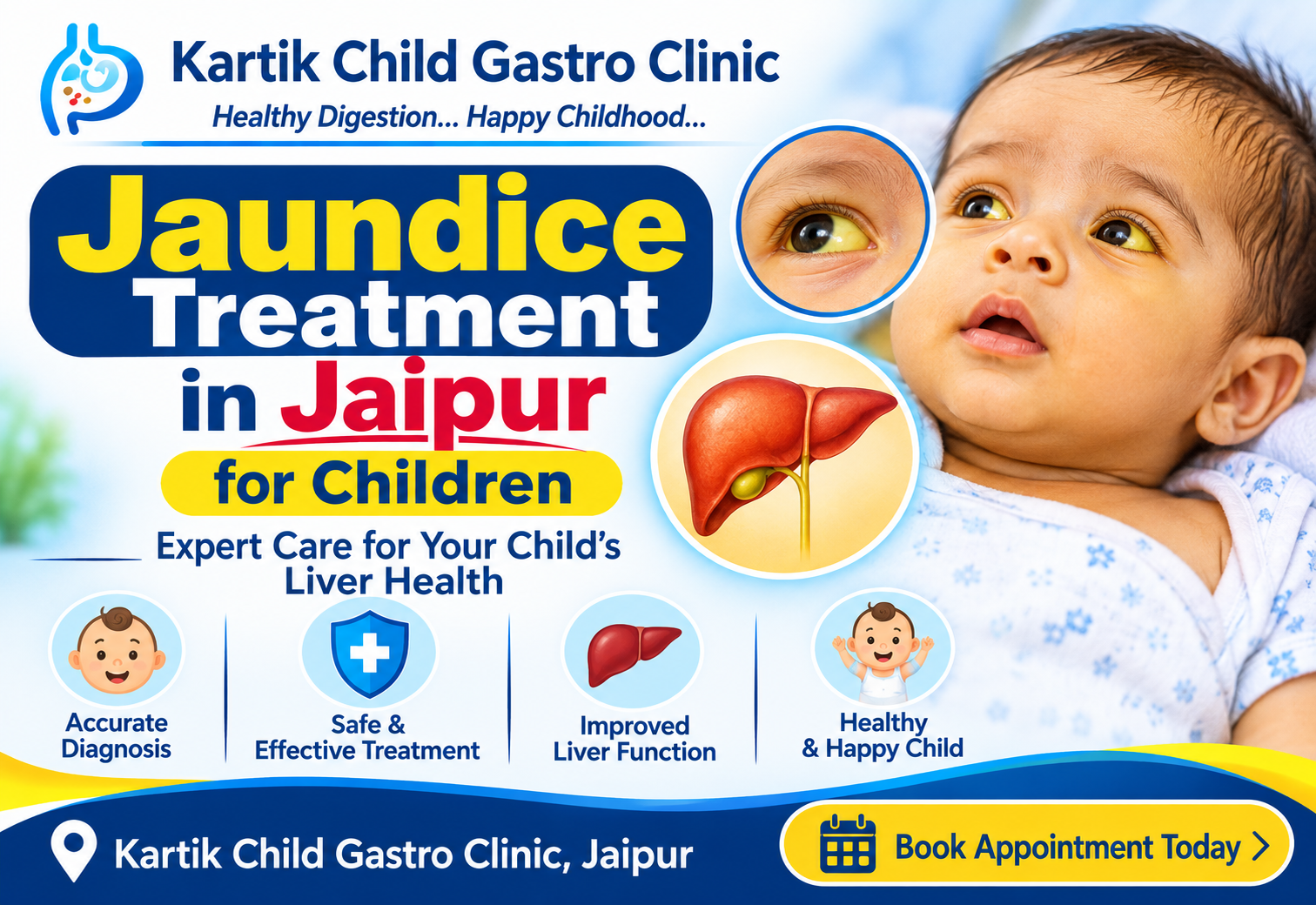
Jaundice is a condition in which the skin and the white part of the eyes turn yellow due to increased bilirubin levels in the blood. It can occur in newborn babies, infants and older children. Jaundice may develop due to liver problems, blood-related conditions, infections or disorders affecting the flow of bile.
In children, identifying the underlying cause of jaundice is important for providing appropriate treatment. Some cases may improve with proper medical monitoring, while others require specialized liver evaluation and treatment.
At Kartik Child Gastro Clinic, we provide specialized pediatric gastroenterology and hepatology consultation for children experiencing jaundice and other liver-related health problems. Dr. Natwar Parwal focuses on evaluating symptoms, identifying possible causes and recommending appropriate medical care according to the child’s condition.
Parents looking for Jaundice Treatment in Jaipur can consult Dr. Natwar Parwal for specialized pediatric liver and digestive health guidance.
About Dr. Natwar Parwal – Pediatric Gastroenterologist
Dr. Natwar Parwal is associated with Kartik Child Gastro Clinic and specializes in pediatric gastroenterology and hepatology.
Educational Qualifications:
- MBBS
- DCH (Diploma in Child Health)
- Fellowship in Pediatric Gastroenterology & Hepatology (ISPGHAN), Medanta – The Medicity, Gurgaon.
With specialized fellowship training in pediatric gastroenterology and hepatology, Dr. Natwar Parwal focuses on evaluating digestive and liver-related conditions in infants, children and adolescents.
His approach emphasizes identifying the underlying cause of symptoms and recommending appropriate medical evaluation, treatment and follow-up care.
What Is Jaundice in Children?
Jaundice is a medical condition characterized by yellowish discoloration of the skin and eyes due to increased bilirubin in the blood.
Bilirubin is a yellow pigment produced when red blood cells break down. Normally, the liver processes bilirubin and helps remove it from the body through bile.
When bilirubin builds up in the blood, jaundice develops.
It can occur due to different medical conditions involving the liver, red blood cells or bile ducts. The treatment depends on identifying the specific cause.
Common Symptoms of Jaundice in Children
Parents should watch for the following signs and symptoms:
- Yellowing of the skin.
- Yellow discoloration of the whites of the eyes.
- Dark yellow or brown urine.
- Pale or clay-coloured stools.
- Loss of appetite.
- Nausea or vomiting.
- Abdominal pain or discomfort.
- Weakness and tiredness.
- Itching of the skin.
- Poor weight gain in some children.
The symptoms may vary depending on the underlying liver or blood-related condition.
Newborn babies with jaundice require prompt medical assessment, particularly if jaundice develops within the first 24 hours after birth or the baby is feeding poorly, unusually sleepy or unwell.
Causes of Jaundice in Children
Several medical conditions can cause increased bilirubin levels in children.
1. Viral Hepatitis
Viral infections such as hepatitis A and hepatitis B can affect liver function and cause jaundice. Symptoms may include tiredness, nausea, abdominal discomfort and yellowing of the eyes.
2. Liver Inflammation
Inflammation of the liver can interfere with normal bilirubin processing and lead to increased bilirubin levels.
3. Hemolytic Conditions
Some blood disorders cause red blood cells to break down faster than normal, resulting in increased bilirubin production.
4. Bile Duct Problems
Conditions affecting the bile ducts can obstruct the normal flow of bile and cause bilirubin to accumulate in the blood.
5. Newborn Jaundice
Newborn babies may develop jaundice because their liver is still developing and may not process bilirubin efficiently. Some cases require monitoring or treatment.
6. Genetic and Metabolic Conditions
Certain inherited conditions can affect bilirubin metabolism or liver function and cause recurring or persistent jaundice.
Types of Jaundice in Children
Understanding the different types can help parents recognize why medical evaluation is important.
1. Pre-Hepatic Jaundice
This type occurs when red blood cells break down faster than normal, increasing bilirubin production.
2. Hepatic Jaundice
This type develops when the liver cannot process bilirubin properly. It may be associated with hepatitis, liver inflammation or other liver conditions.
3. Post-Hepatic Jaundice
This occurs when bile flow is obstructed, preventing bilirubin from being properly eliminated from the body.
The doctor may recommend specific tests to identify the type and underlying cause.
When Should You Consult a Pediatric Liver Specialist?
Jaundice should not be ignored, particularly when it occurs in older infants or children.
Consult a specialist if your child experiences:
- Yellowing of the eyes or skin.
- Dark urine.
- Pale or clay-coloured stools.
- Persistent abdominal discomfort.
- Loss of appetite.
- Repeated vomiting.
- Unexplained weakness or tiredness.
- Persistent itching.
- Recurring episodes of jaundice.
Seek urgent medical attention if jaundice is accompanied by unusual sleepiness, confusion, bleeding, severe abdominal pain, repeated vomiting or significant feeding difficulties in a newborn.
Diagnosis of Jaundice in Children
Proper diagnosis helps identify the reason for increased bilirubin levels and guides appropriate treatment.
At Kartik Child Gastro Clinic, the doctor may recommend the following evaluations depending on the child’s condition.
1. Medical History and Physical Examination
The doctor reviews the child’s symptoms, medical history, medication use, feeding habits and growth pattern.
2. Bilirubin Blood Test
A blood test measures total and direct bilirubin levels to understand the severity and pattern of bilirubin elevation.
3. Liver Function Tests
Liver function tests may help assess liver health and identify signs of liver inflammation or injury.
4. Complete Blood Count
A CBC may be recommended to evaluate blood-related conditions that can contribute to increased bilirubin.
5. Viral Hepatitis Tests
Specific blood tests may be required when viral hepatitis is suspected.
6. Ultrasound Examination
An abdominal ultrasound may help examine the liver, gallbladder and bile ducts when obstruction or structural problems are suspected.
Additional investigations may be required depending on the child’s symptoms and initial test results.
Jaundice Treatment for Children
Treatment depends on the underlying cause, bilirubin levels, child’s age and overall health.
1. Treatment of the Underlying Cause
The doctor first identifies the condition responsible for jaundice. Treatment may involve managing an infection, liver inflammation, blood disorder or bile duct problem.
2. Phototherapy for Newborn Jaundice
Phototherapy is commonly used for newborn babies when bilirubin levels reach treatment thresholds. Special blue light helps the baby’s body eliminate bilirubin more effectively.
3. Management of Viral Hepatitis
Treatment depends on the type of hepatitis and the child’s medical condition. Some viral infections require supportive care and monitoring, while others may need specific medical management.
4. Nutritional Support
Appropriate nutrition and hydration are important for children with liver-related conditions. Dietary recommendations depend on the child’s age and medical needs.
5. Monitoring Bilirubin Levels
The doctor may recommend repeat blood tests to monitor bilirubin levels and evaluate the child’s recovery.
6. Specialized Liver Care
Children with persistent or recurring jaundice may require further evaluation for underlying liver, metabolic or genetic conditions.
Parents should avoid self-medication and unverified home remedies for jaundice.
Why Choose Kartik Child Gastro Clinic?
Kartik Child Gastro Clinic focuses on specialized digestive and liver health consultation for children.
Reasons to consult our clinic include:
- Consultation with Dr. Natwar Parwal.
- Fellowship training in Pediatric Gastroenterology & Hepatology.
- Evaluation of childhood liver disorders.
- Assessment of increased bilirubin levels.
- Guidance regarding liver function tests.
- Evaluation of recurring jaundice.
- Individualized medical recommendations.
- Parent-focused guidance and follow-up care.
Our goal is to help parents understand their child’s liver health concerns and receive appropriate specialist consultation.
Book an Appointment for Children’s Jaundice Consultation
Yellowing of the skin or eyes can be an important sign of an underlying medical condition. Early evaluation helps identify the cause and determine the appropriate treatment.
At Kartik Child Gastro Clinic, Dr. Natwar Parwal provides specialized consultation for children experiencing jaundice, liver problems and other digestive health concerns.
Consult Dr. Natwar Parwal
MBBS, DCH, Fellowship Pediatric Gastroenterology & Hepatology (ISPGHAN), Medanta The Medicity, Gurgaon.
Contact Kartik Child Gastro Clinic to schedule an appointment for your child.
Frequently Asked Questions (FAQs)
1. What causes jaundice in children?
Jaundice can develop due to viral hepatitis, liver inflammation, blood disorders, bile duct obstruction or inherited metabolic conditions. The underlying cause needs proper medical evaluation.
2. What are the early signs of jaundice in children?
Common signs include yellowing of the eyes and skin, dark urine, pale stools, loss of appetite, nausea and tiredness.
3. Is jaundice dangerous for children?
The seriousness depends on the underlying cause and bilirubin levels. Some cases are mild, while others may indicate significant liver or blood-related problems requiring prompt treatment.
4. How is jaundice diagnosed in children?
Diagnosis may involve bilirubin blood tests, liver function tests, CBC, viral hepatitis testing and abdominal ultrasound, depending on the child’s symptoms.
5. How long does jaundice take to recover in children?
Recovery time depends on the cause, the child’s age and the severity of the condition. Newborn jaundice and liver-related jaundice have different treatment and monitoring requirements.
6. Can viral hepatitis cause jaundice in children?
Yes. Certain viral infections, including hepatitis A and hepatitis B, can affect liver function and cause increased bilirubin levels.
7. What foods should children eat during jaundice?
Children should generally receive balanced, age-appropriate nutrition and adequate fluids. Specific dietary recommendations depend on the underlying liver condition and should be discussed with the treating doctor.
8. Is newborn jaundice common?
Yes. Newborn jaundice is common because a baby’s liver is still developing. However, bilirubin levels must be assessed because some babies require phototherapy or other medical treatment.
9. Can jaundice occur again in children?
Yes. Recurring jaundice may be associated with certain liver, blood-related, genetic or metabolic conditions. Further medical evaluation may be required.
10. Which doctor should I consult for jaundice in children?
A pediatric gastroenterologist or pediatric hepatology specialist can evaluate liver-related conditions in children. Dr. Natwar Parwal at Kartik Child Gastro Clinic provides specialized consultation for children’s digestive and liver health concerns.