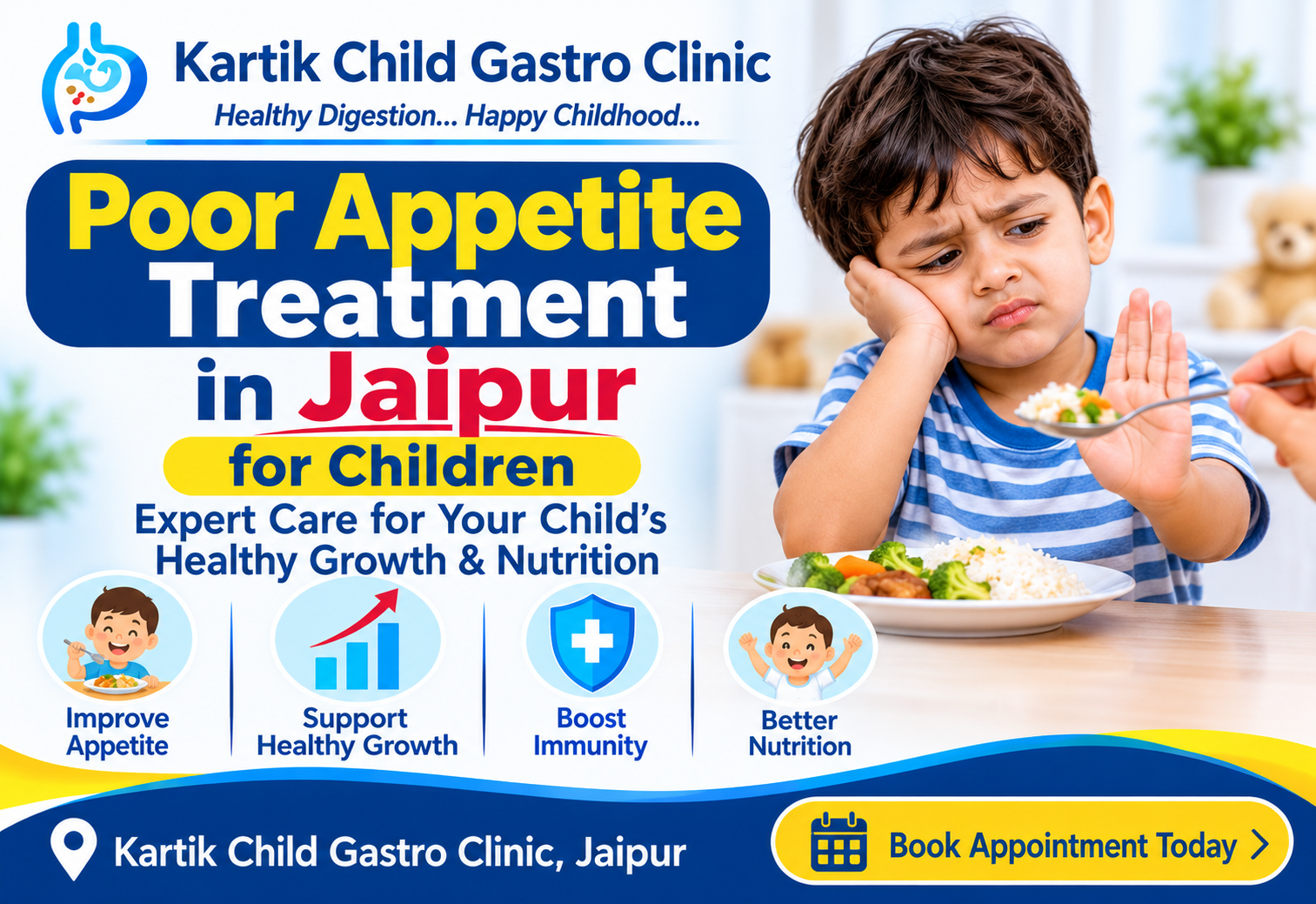
Poor appetite in children can affect their daily nutrition, energy levels, and healthy growth. Some children eat very little, refuse meals, or show no interest in food. While occasional changes in appetite can be normal, regularly eating less than expected may need medical attention.
At Kartik Child Gastro Clinic, children experiencing ongoing appetite problems can receive an appropriate evaluation under the guidance of Dr. Natwar Parwal, MBBS, DCH, Fellowship in Pediatric Gastroenterology & Hepatology (ISPGHAN), Medanta The Medicity, Gurgaon. The focus is on identifying possible digestive or other health-related causes and guiding parents towards suitable care.
Common Reasons for Poor Appetite in Children
A child’s appetite can be affected by several factors, including:
- Constipation: Hard stools and abdominal discomfort can make children feel full.
- Digestive problems: Bloating, acidity, indigestion, and stomach discomfort may reduce hunger.
- Food intolerance: Certain foods may cause digestive discomfort.
- Frequent infections: Illness can temporarily affect appetite.
- Nutritional deficiencies: Some deficiencies may be associated with tiredness and changes in eating habits.
- Irregular eating routines: Frequent snacks, sugary drinks, or excessive milk intake can affect hunger at mealtimes.
- Emotional factors: Stress, anxiety, or changes in daily routine may influence eating habits.
Signs Parents Should Not Ignore
Parents should consult a doctor if their child regularly:
- Refuses food or eats very small portions.
- Shows little interest in meals.
- Complains of stomach pain or bloating.
- Experiences constipation or irregular bowel movements.
- Has frequent vomiting or loose motions.
- Feels unusually tired or weak.
- Does not gain weight as expected.
Unexplained weight loss, dehydration, persistent vomiting, or blood in stools requires prompt medical attention.
How Is Poor Appetite Evaluated?
The doctor may review the child’s eating habits, medical history, growth pattern, and associated digestive symptoms. A physical examination and further tests may be recommended depending on the findings.
The evaluation may include:
- Checking the child’s height and weight.
- Reviewing daily food intake and meal timings.
- Assessing constipation and other digestive symptoms.
- Blood tests when a nutritional deficiency or another condition is suspected.
- Additional investigations when medically necessary.
Not every child requires laboratory tests or specialised procedures.
Treatment and Care for Poor Appetite
The right approach depends on the underlying reason for reduced appetite. Treatment may include:
- Managing digestive concerns: Treating conditions such as constipation or other diagnosed gastrointestinal problems.
- Improving meal routines: Following regular meal and snack timings.
- Offering balanced meals: Including age-appropriate nutritious foods.
- Encouraging healthy eating habits: Avoiding force-feeding and maintaining a relaxed mealtime environment.
- Correcting nutritional deficiencies: Using supplements only when recommended by a doctor.
- Monitoring growth: Tracking the child’s weight and height to assess development.
Parents should avoid giving appetite stimulants or supplements without medical advice.
Why Choose Kartik Child Gastro Clinic?
Kartik Child Gastro Clinic provides consultation for children’s digestive and liver-related health concerns. Dr. Natwar Parwal evaluates symptoms such as reduced appetite, constipation, abdominal discomfort, vomiting, and other gastrointestinal problems to help identify possible underlying causes.
Parents can discuss their child’s eating habits, digestive symptoms, and growth concerns to understand the next appropriate steps.
Frequently Asked Questions
1. When should I consult a doctor for my child’s poor appetite?
Consult a doctor if reduced appetite continues, affects your child’s growth, or is accompanied by weight loss, stomach pain, vomiting, or changes in bowel movements.
2. Can constipation reduce a child’s appetite?
Yes. Constipation may cause abdominal fullness, pain, and discomfort, which can reduce a child’s interest in food.
3. Is poor appetite normal in children?
Appetite can vary with age, activity, and growth. However, persistent changes in eating habits or poor weight gain should be evaluated.
4. Should I give appetite syrup to my child?
Do not give appetite syrups or stimulants without consulting a doctor. The underlying reason for reduced appetite should be assessed first.
5. Can digestive problems affect children’s eating habits?
Yes. Constipation, bloating, abdominal discomfort, and certain gastrointestinal conditions can affect hunger and food intake.