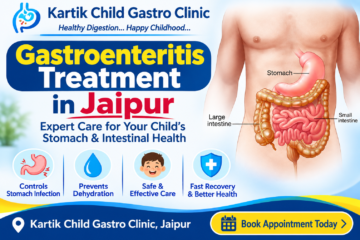
Colonoscopy is a specialised medical procedure used to examine the inner lining of the large intestine and rectum. It helps doctors investigate digestive problems such as blood in stools, persistent diarrhoea, unexplained abdominal pain, and intestinal inflammation. In children, this procedure is recommended when symptoms require further medical investigation.
At Kartik Child Gastro, parents can consult Dr. Natwar Parwal for children’s digestive and liver-related concerns. He holds MBBS, DCH, and a Fellowship in Pediatric Gastroenterology & Hepatology (ISPGHAN) from Medanta The Medicity, Gurgaon. He evaluates children’s symptoms and guides families regarding suitable investigations and further care.
What Is Colonoscopy?
Colonoscopy is an endoscopic procedure that allows a doctor to examine the large intestine using a thin, flexible tube with a small camera. The instrument is gently passed through the rectum to view the intestinal lining.
The procedure helps identify inflammation, ulcers, polyps, and possible sources of intestinal bleeding. If required, the doctor may also collect small tissue samples (biopsies) for laboratory examination.
When Does a Child Need Colonoscopy?
A doctor may recommend colonoscopy if a child experiences:
- Repeated blood in stools.
- Persistent diarrhoea.
- Unexplained abdominal pain.
- Unexplained weight loss or poor growth.
- Suspected inflammatory bowel disease.
- Unexplained anaemia in selected cases.
- Suspected intestinal ulcers or inflammation.
- Persistent changes in bowel habits.
Not every child with stomach pain, constipation, or loose motions needs this procedure. The decision depends on the child’s symptoms, examination, and medical history.
Conditions Evaluated Through Colonoscopy
Colonoscopy may help doctors investigate different conditions affecting the large intestine.
1. Ulcerative Colitis
Ulcerative colitis is an inflammatory bowel disease that causes inflammation and ulcers in the lining of the colon. Colonoscopy and biopsies can help assess the condition.
2. Crohn’s Disease
Crohn’s disease can affect different parts of the digestive tract. Colonoscopy may help examine the colon and the end of the small intestine when appropriate.
3. Intestinal Polyps
Polyps are small growths that develop on the inner lining of the intestine. Colonoscopy helps identify them, and selected polyps may be removed during the procedure.
4. Gastrointestinal Bleeding
When a child has blood in stools, colonoscopy may help identify possible sources of bleeding in the large intestine.
5. Chronic Diarrhoea
If diarrhoea continues without a clear explanation, colonoscopy and biopsy may help investigate intestinal inflammation or other digestive conditions.
How Is Colonoscopy Performed in Children?
The procedure is planned according to the child’s age, medical history, and health condition.
- Medical assessment: The doctor reviews the child’s symptoms and previous reports.
- Bowel preparation: Parents receive instructions to clean the intestine before the procedure.
- Sedation or anaesthesia: Appropriate sedation or anaesthesia is generally used for children under trained medical supervision.
- Examination: A flexible camera is used to examine the inner lining of the colon.
- Biopsy: Small tissue samples may be collected if required.
- Recovery: The child is monitored after the procedure and receives further instructions from the medical team.
Is Colonoscopy Safe for Children?
Colonoscopy is generally considered safe when performed for an appropriate medical reason by a trained paediatric endoscopy team. However, like any medical procedure, it has possible risks.
These may include temporary bloating, abdominal discomfort, bleeding, or, rarely, injury to the intestinal wall. The medical team explains the benefits, risks, and preparation requirements before the procedure.
How to Prepare Your Child for Colonoscopy
Proper preparation helps the doctor get a clear view of the intestine. Parents should follow the medical team’s instructions carefully.
- Follow the recommended food and fluid instructions.
- Give bowel preparation medicines exactly as prescribed.
- Inform the doctor about the child’s medicines and allergies.
- Share previous medical reports and test results.
- Follow fasting instructions before sedation or anaesthesia.
- Inform the medical team if the child becomes unwell before the procedure.
Do not change medicines or preparation instructions without medical advice.
About Dr. Natwar Parwal
Dr. Natwar Parwal
Qualifications: MBBS, DCH, Fellowship in Pediatric Gastroenterology & Hepatology (ISPGHAN), Medanta The Medicity, Gurgaon.
Dr. Natwar Parwal focuses on children’s digestive and liver-related health concerns. At Kartik Child Gastro, parents can consult him for symptoms such as persistent diarrhoea, blood in stools, abdominal pain, constipation, and unexplained weight loss.
He evaluates the child’s condition and guides parents regarding appropriate diagnostic tests, specialist investigations, and further management.
Why Consult Kartik Child Gastro?
- Consultation for children’s digestive and liver-related concerns.
- Evaluation of persistent stomach pain and bowel problems.
- Guidance for suspected intestinal inflammation.
- Assessment of blood in stools and unexplained digestive symptoms.
- Medical advice regarding suitable investigations and follow-up care.
If your child has ongoing digestive symptoms, timely medical consultation can help identify the possible cause and determine the next steps.
Frequently Asked Questions
1. What is colonoscopy used for in children?
Colonoscopy is used to examine the large intestine and rectum. It may help investigate blood in stools, persistent diarrhoea, suspected inflammatory bowel disease, and unexplained digestive symptoms.
2. Is colonoscopy painful for children?
Children generally receive appropriate sedation or anaesthesia during the procedure. Some may experience temporary bloating or mild abdominal discomfort afterwards.
3. How long does a colonoscopy take?
The examination often takes around 30–60 minutes. The total hospital visit may take longer because of preparation, anaesthesia, and recovery.
4. Does every child with blood in stools need colonoscopy?
No. Blood in stools can have different causes, including anal fissures and infections. The doctor decides whether colonoscopy is necessary after evaluating the child.
5. Can colonoscopy detect ulcerative colitis?
Yes. Colonoscopy can help identify inflammation in the colon. Biopsies may provide additional information to support diagnosis.
6. Is bowel preparation necessary before colonoscopy?
Yes. The intestine needs to be cleaned so the doctor can examine its lining clearly. Parents should follow the prescribed preparation instructions.
7. Can a biopsy be taken during colonoscopy?
Yes. Small tissue samples may be collected during the procedure when medically required and examined in a laboratory.
8. When should I consult a child gastroenterologist?
Consult a specialist if your child has persistent diarrhoea, repeated blood in stools, unexplained abdominal pain, poor growth, or other ongoing digestive concerns.