
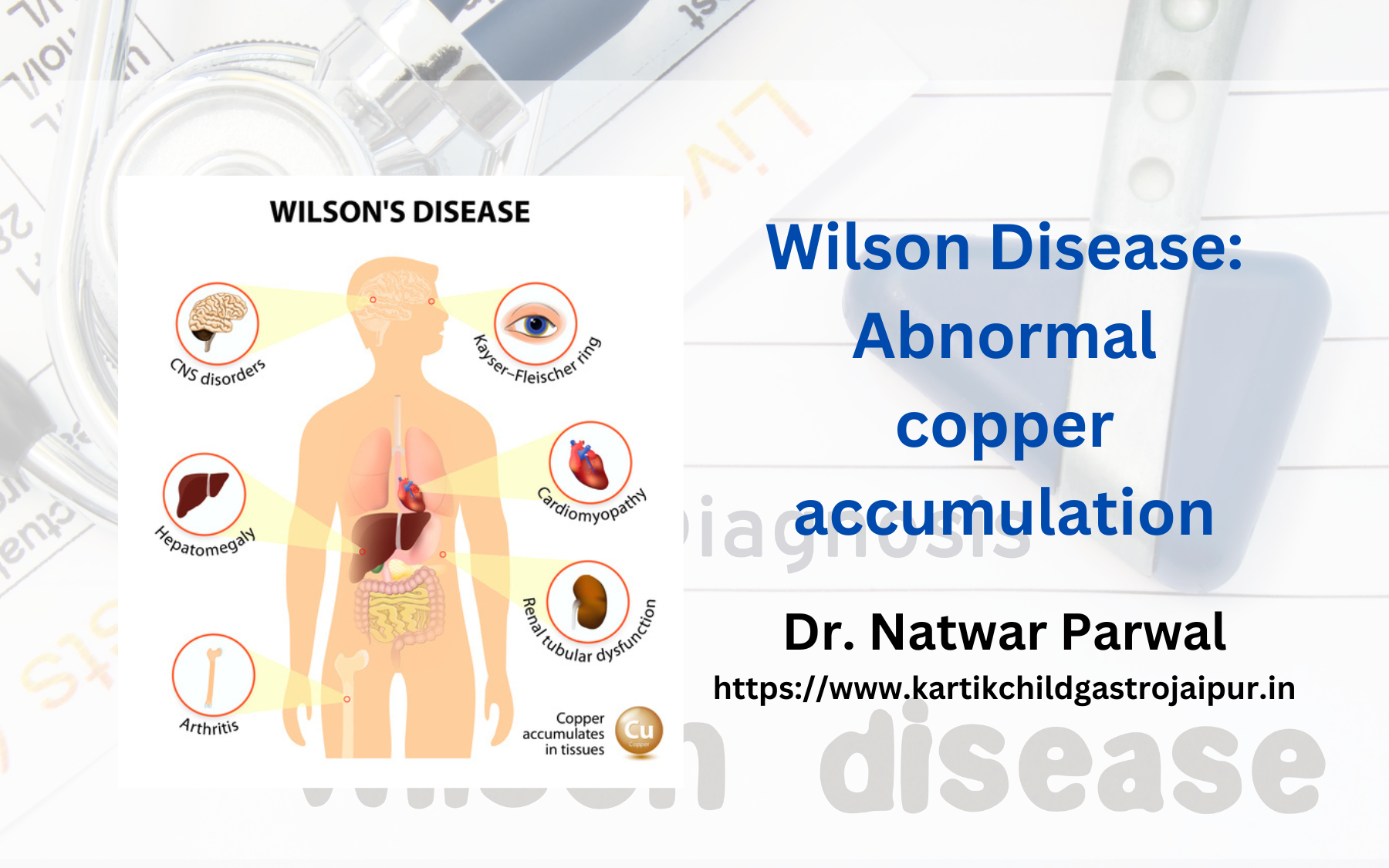
Wilson disease is a rare, autosomal recessive disorder caused by abnormal copper accumulation in the body particularly involving the brain, liver, and cornea.
In individuals with Wilson disease, copper, a vital trace element, doesn’t follow the body’s normal regulatory pathways. Instead, it accumulates at dangerous levels in various organs, including the liver, kidneys, brain, and eyes. This excess copper wreaks havoc on the body’s delicate balance, leading to a range of symptoms.
1. Varied Presentations
- Wilson disease can present as acute liver failure (ALF), acute-on-chronic liver disease (ACLD), or chronic liver disease (CLD).
2. The Copper Conundrum
- This disease is characterized by the excessive accumulation of copper in the body, primarily affecting the liver, kidneys, brain, and eyes.
3. Diverse Symptoms
- While Wilson disease often appears as hepatitis, it can also present with neurological symptoms, even without hepatitis.
4. Genetic Roots
- Wilson disease is a genetic disorder caused by mutations in the ATP7B gene. It typically becomes apparent in individuals over 3 years of age.
5. Key Diagnostic Markers
- Two crucial markers for diagnosing Wilson disease are elevated AST (Aspartate Aminotransferase) levels, which are greater than ALT (Alanine Aminotransferase) levels by a factor of 2, and alkaline phosphatase (ALKPO4) levels that are less than four times the total bilirubin levels.
6. Persistent INR
- In Wilson disease, the INR (International Normalized Ratio) often remains high and doesn’t normalize without specific treatment.
7. Diagnostic Tests
- Diagnostic tests include measuring serum ceruloplasmin levels, 24-hour urinary copper excretion, the presence of a KF ring during slit lamp eye examination, liver biopsy, and quantifying dry copper weight.
8. Differential Diagnosis
- It’s essential to differentiate Wilson disease from autoimmune hepatitis, as the two conditions share some similarities.
9. Treatment Avenues
- Treatment options for Wilson disease include medications like penicillamine, zinc, and trienteine. In refractory cases, liver transplantation may be necessary.
Wilson disease demands early detection and intervention. With its diverse clinical presentations, this condition underscores the importance of a comprehensive understanding among medical practitioners and vigilance in diagnosis and treatment.